
THE SHORT ANSWER
A good long-term hire agreement answers nine questions in writing: how long, how many hours a year, what servicing is included, what counts as fair wear and tear, who pays for delivery and collection, who insures the machine, what happens if it breaks down, what it costs to exit early, and what your options are at the end. If any of those are missing or vague, ask before you sign — the weekly rate is only half the contract.
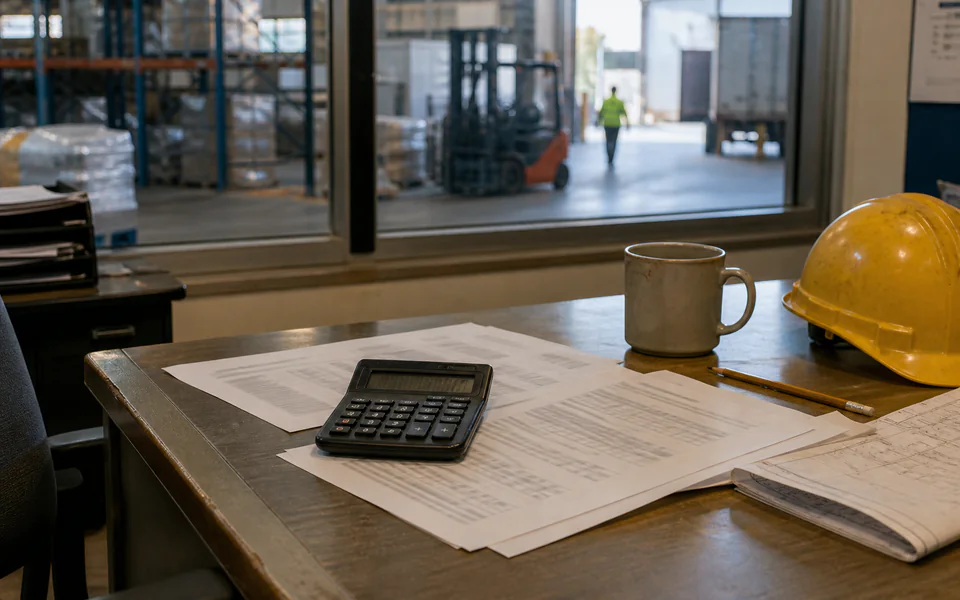
Why the weekly rate is only half the contract
Two quotes can show the same weekly rate and cost you very different amounts over three years. The difference lives in the clauses: hours allowances, what "fully maintained" covers, what you pay when the machine goes back, and what it costs to change your mind. An Australian legal guide to equipment hire agreements makes the same point — the agreement should record the condition on handover, who bears damage and loss, how breakdowns are handled, insurance obligations and how either side can end the hire (Sprintlaw, equipment hire agreements).
Below are the nine clauses we think every long-term forklift hire agreement should answer, with the question to ask if yours does not.
1. Term and what happens at the end
Check the start date, the end date and what triggers the start — delivery, commissioning or signature. Then check the end: does the agreement roll month to month, auto-renew for another full term, or stop? Rolling month to month at the same rate is the fairest default; automatic renewal for another fixed term is the one that catches people. Our agreements run 12 to 60 months and finish with a choice: return, extend or upgrade to a newer machine.
Ask: "What exactly happens on the last day of the term if I do nothing?"
2. The hours allowance
Most long-term rates assume a usage band — ours is up to 1,200 hours a year — because servicing intervals and residual value both depend on hours. The clause should state the annual allowance, how excess hours are measured (hour meter readings at service visits) and the rate per extra hour. A multi-shift site on a single-shift allowance will pay more; it is better to price the real hours up front than to argue about them at the end.
Ask: "What is the hours allowance, and what does an extra hour cost?"
3. Servicing and maintenance — define "fully maintained"
"Fully maintained" without a definition is where hire disputes start. The clause should list what is included (scheduled preventative servicing to the manufacturer's plan, fair wear-and-tear repairs, breakdown response) and what is not (damage, misuse, tyres beyond fair wear, excess hours, operator licences, charger electrical work). Our maintenance guide walks through both columns; the pricing page shows how we write them into the quote.
Ask: "Show me the two lists — included and itemised separately."
4. Fair wear and tear
The industry reference in Australia is the Fair Wear and Tear Guide from the Australian Forklift and Industrial Truck Association (AFITA). Its definition is useful: age-related deterioration that occurs while the machine is used in line with the operating instructions, with daily checks carried out and regular servicing done by an authorised agent. Damage from misuse, overloading, poor housekeeping or aggressive environments is not wear and tear and is chargeable (AFITA Fair Wear and Tear Guide, v2 2018). The guide even sets thresholds — for example, minor dents within 20 mm and light scratches up to 25 mm that have not penetrated the paint are acceptable; multiple dents on one panel are not.
The agreement should either attach a wear-and-tear schedule or reference the AFITA guide. Large hire companies publish their own policies; Adaptalift's, for instance, excludes tyres entirely from fair wear and tear and treats corrosive environments as chargeable unless the hire agreement specifically covers them (Adaptalift Group fair wear and tear policy). Read that kind of detail before delivery, not after. Our end-of-term guide goes component by component.
Ask: "Which wear-and-tear schedule applies, and can I have a copy now?"
5. Condition on handover
Insist on a documented handover: a delivery checklist, hour-meter reading and timestamped photos of every panel, the forks, the mast and the seat. The legal guide above calls this the evidence that settles disputes about pre-existing marks. If the machine is not new, every existing mark should be noted by both parties before it goes to work — AFITA says the same.
Ask: "Will I get a signed handover checklist with photos?"
6. Delivery, collection and relocation
Delivery and end-of-term collection are freight charges. The honest way to quote them is as one-off, itemised amounts by zone — in metro Melbourne we quote typically $150–$350 ex GST each way depending on zone and machine, confirmed in writing — rather than folding them into the weekly rate where you cannot see them. Also check what it costs to relocate the machine if you move sites mid-term, and whether the supplier must approve the new site first (charging supply and floors matter).
Ask: "What are delivery and collection, as separate line items?"
7. Breakdown response and replacement
A fully maintained rate should buy you a defined breakdown process: who you call, the expected response window, and whether a replacement machine is supplied if a repair runs long. The clause should also say what happens to hire charges during extended downtime that is not your fault. Our agreements coordinate breakdown response through the authorised EP and BYD dealer network, with like-for-like replacement during major repairs part of the up-front conversation.
Ask: "If the machine is off the floor for a week, do I keep paying?"
8. Insurance and liability
Someone has to insure the machine against damage, theft and loss, and someone has to carry public liability for its use on your site. Agreements commonly require the hirer to hold cover and provide evidence, or offer a damage waiver for a fee. Read the excess, the exclusions (operating without a licensed operator usually voids cover) and who pays for damage to your own building and racking — the AFITA guide notes that damage to the surroundings can cost more than damage to the forklift.
Ask: "Who insures the machine, what is the excess, and what does operator misuse do to the cover?"
9. Early exit, upgrade and swap
Businesses change. The clause should say what it costs to end the term early (a fixed exit fee, a percentage of the remaining rentals, or a negotiated figure) and whether you can swap to a different model mid-term if your loads or racking change. We would rather re-fit you into the right machine than hold you to the wrong one — but that should be in writing, not goodwill.
Ask: "What does it cost to leave early, and can I change machines mid-term?"
A quick checklist to take into the meeting
| Clause | Pass if the agreement states… |
|---|---|
| Term | Start trigger, end date, what happens on the last day |
| Hours | Annual allowance and the per-hour excess rate |
| Servicing | Included list and itemised-separately list |
| Wear and tear | AFITA guide or an attached schedule |
| Handover | Signed checklist with photos and hour-meter reading |
| Freight | Delivery and collection as one-off line items by zone |
| Breakdowns | Response window, replacement policy, downtime charges |
| Insurance | Who insures, excess, exclusions, liability for site damage |
| Exit | Early-exit cost, mid-term swap or upgrade rights |
Bring this list to every supplier. A written quote that answers all nine is a quote you can compare; one that answers three is a weekly rate with a surprise attached. If you want ours, request a written quote — every clause above is itemised in it.
Sources and review dates
- Equipment hire agreement: what Australian businesses need to know — Sprintlaw. Checked 20 October 2026.
- AFITA Fair Wear and Tear Guide, version 2 (2018) — Australian Forklift and Industrial Truck Association. Checked 20 October 2026.
- Adaptalift Group fair wear and tear policy — Adaptalift Group. Checked 20 October 2026.
This guide is general information about hire agreements, not legal advice. Have your own agreement reviewed by a lawyer if you are unsure about a clause.