
THE SHORT ANSWER
Before each shift, the operator should walk around the forklift checking forks, mast and chains, tyres, battery charge and connections, then test from the seat: brakes, steering, horn, lights, seatbelt and hydraulic controls. Faults get reported and the machine tagged out — and every check should be logged, because the record is your evidence of a safe system of work.
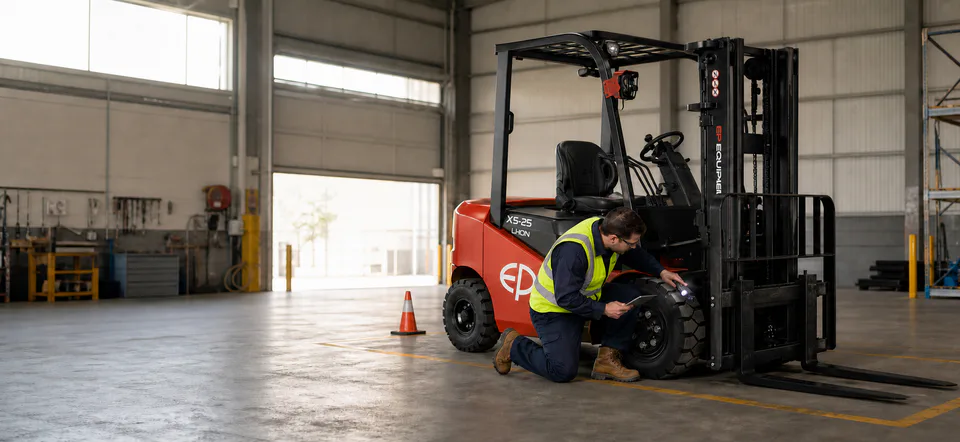
Why the five-minute walk-around earns its keep
A forklift that fails in motion is a workplace incident; a fault found at pre-start is a maintenance ticket. The difference is five minutes and a checklist. In Victoria, employers must provide and maintain safe plant — a documented daily check regime is the simplest evidence that you do.
The checklist (electric counterbalance)
Walk-around, machine off:
- Forks — no cracks, bends, or heel wear; locking pins seated; both forks matched height
- Mast & chains — chains evenly tensioned, no kinked or rusted links; no hydraulic weeps on lift cylinders
- Tyres — solid tyres: no chunking or debris embedded; check wear line
- Overhead guard — no cracked welds or deformation
- Battery — charge state adequate for the shift; connector clean and fully seated; no damage to the charging port (lithium packs need no water checks — one of the reasons they suit hire)
- Data plate & load chart — present, legible, matches the attachments actually fitted
- Leaks — no fresh fluid on the floor where it parked
From the seat, machine on:
- Seatbelt — latches and retracts; seat switch (OPS) cuts drive when unoccupied
- Brakes — service brake and park brake both hold
- Steering — full lock both ways, no grinding or play
- Horn, lights, beacons — all functional (LED work lights, warning lights, reverse beeper)
- Hydraulics — lift, lower, tilt and side shift through full travel, no jerking or drift
- Display — no active fault codes; hour meter reading noted
Found a fault? Tag it out
A fault that affects safe operation means the machine doesn’t work that shift: key out, tag on, report it. On our hire agreements, that phone call is ours to deal with — breakdown response is part of the service, and a fault caught at pre-start is usually fixed before it becomes downtime.
The logging part everyone skips
A checklist that isn’t recorded didn’t happen — not to WorkSafe, not to your insurer, not in court. Keep it simple: a one-line entry per day (date, hour meter, operator initials, OK/fault) is enough. Every machine we deliver arrives with a printed pre-start checklist and log book matched to its configuration; we also keep the servicing and inspection records on our side, because Victorian regulations require hire companies to maintain them between hires. Between your daily log and our service file, the machine’s whole compliance story is documented.
General guidance, reviewed August 2026 — your site’s safe work procedures and WorkSafe Victoria requirements govern.